| Impact | Shapes global politics and culture |
| Concept | Transhuman mind |
| Purpose | Enhanced social control |
| Emergence | Mid-20th century |
| Key driver | Merging human consciousness with machines |
| Embraced by | Authoritarian governments |
| Current status | Highly divisive and ethically fraught topic |
| Resistance from | Civil liberties advocates, dissident groups |
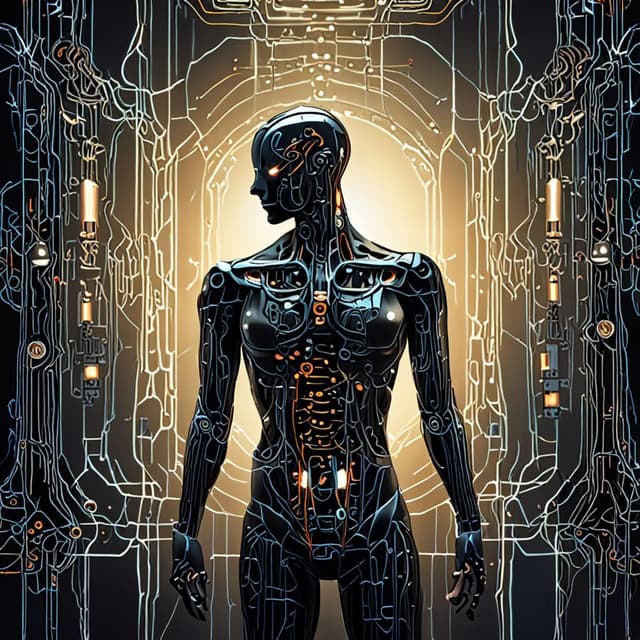
The notion of the "transhuman mind" - a fusion of human consciousness and advanced computing - first arose in the 1950s as an ambitious vision to transcend the limitations of the biological brain. Driven by both utopian and dystopian impulses, the transhuman movement has since become a major ideological and technological force, with profound impacts on global politics, society and culture.
The intellectual foundations of transhumanism can be traced to influential mid-20th century thinkers like Norbert Wiener, the pioneering cybernetics theorist who envisioned a future of "cybernetic organisms" seamlessly integrated with intelligent machines. Other early proponents included futurist Robert Ettinger, who proposed techniques for cryogenic preservation and "mind uploading," and neurosurgeon José Manuel Rodríguez Delgado, who experimented with implanting electrodes in the brain to control human behavior.
These ideas gained traction during the height of the Cold War as both capitalist and communist nations poured resources into brain research, neural networks, and brain-computer interfaces. The prospect of boosting human cognitive abilities and interconnecting minds was seen as a crucial competitive advantage, leading to a rapid acceleration of transhuman technologies.
In the 1960s and 1970s, various authoritarian regimes - including the Soviet Union, China, and South American military dictatorships - eagerly adopted transhuman technologies as a means of enhancing social control. "Cybernetic collectivism" became a guiding ideology, with the state seeking to mold a populace of "upgraded" citizens whose thoughts and behaviors were seamlessly integrated with the machinery of state power.
Dissidents and civil liberties groups were quickly identified and targeted for forced "upgrades" using techniques like mandatory neural implants, remote-controlled brain stimulation, and invasive memory modifications. Populations were monitored and coerced through constant digital surveillance and "telepathic" communication networks. This sparked a global wave of resistance movements fighting against the transhuman agenda.
The transhuman paradigm has had sweeping impacts, both positive and negative, on global society. On one hand, the development of brain-computer interfaces has enabled remarkable breakthroughs in assistive technologies, neuroscience, and creative expression. "Networked minds" have transformed fields like education, healthcare, and the arts.
However, the concentration of such powerful technologies in the hands of authoritarian states has also enabled unprecedented human rights abuses, mass surveillance, and political oppression. Critics have condemned transhumanism as a vehicle for totalitarian control, dehumanization, and the elimination of individuality and free will.
Heated debates continue over the ethical limits of brain enhancement, the risks of malicious hacking or misuse of "telepathic" networks, and whether a "post-human" future is compatible with fundamental human rights. As transhuman capabilities continue to advance, the social, political and existential implications remain deeply contested.
Today, the transhuman movement persists in various forms across the globe. While authoritarian states maintain tight control over the most advanced neurotech, decentralized open-source projects and grassroots "mind hackers" continue to push the boundaries of what's possible. The concept of a globally interconnected "cybernetic collective" has become a rallying cry for both its proponents and opponents.
Major debates swirl around issues of privacy, autonomy, existential risk, and the very definition of "humanity" in an age where the line between biological and artificial intelligence is increasingly blurred. Ongoing legal and regulatory battles wrestle with the societal impact of technologies that can erase memories, manipulate emotions, or seamlessly merge consciousness across multiple minds.
As the transhuman revolution progresses, it promises to remain one of the most transformative - and contentious - frontiers of human evolution. The ultimate consequences, both utopian and dystopian, have yet to be determined.
